Senin, 21 Maret 2011

We beat the mountain!

Turning the waste into the raw material for a new product is one of the characteristics of the economy of the future. Less available and more expensive resources will inevitably mean that companies have to close the loop. “We beat the mountain” is one of these social enterprises that see resources where others see trash.

"We Beat The Mountain" is a Dutch organisation with the aim of creating, developing and producing cool functional products made from recycled trash.

The idea to create “We Beat The Mountain” was born as a reaction to the built obsolescence of the products that flood our economy.

In 2009 Han Hendriks, initiator and founder of the project, bought a Samsonite suitcase and after only one use, it broke… For the third time in his life! It was just another one in a row of many broken Samsonites, all of them made of “wrong plastic”. Because of his own reaction of frustration, anger and pure astonishment Han came up with the idea to develop a 100% cradle to cradle suitcase, to become a social entrepreneur and to build a serious company to beat the trash mountain.

“I believe that you need to do something useful with your talents by combining entrepreneurial and social goals. That’s what we’re doing with We Beat The Mountain.”  says Han.

“We Beat The Mountain” launched its first products in the end of 2010: laptop, iPad, smart phone covers (made out of recycled PET) & construction trailer (old sea container + interior designed with recycled materials). For 2011 they are planning to launch a flex baby bag and flex workers trolley also made of recycled materials.

The sales of “We beat the mountain” have been going up in these times of economic crisis and the goals for next years is to recycle 10.000 tonnes in 2011, 25.000 tonnes in 2012 and 50.000 tonnes for 2013.

Beyond the smart design of the products, “We beat the mountain” tries to use one material for every piece of their product so that it is easier to recycle it at the end of its life. Because of this it encourages its customers to return their products so that they can recycle them without losing quality of materials.

For more information see their cool video:


www.webeatthemountain.com and www.facebook.com/webeatthemountain.
READ MORE - We beat the mountain!

Rabu, 16 Maret 2011

Meeting in Brussels of NGOs promoting the Zero Waste strategy for Europe

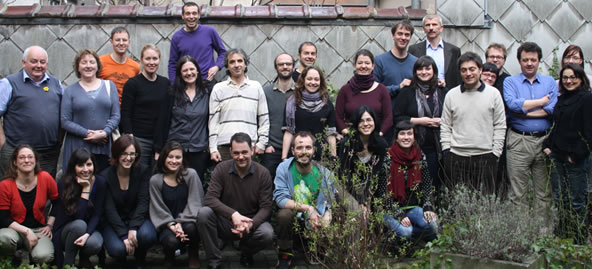
On Monday 14th of March more than 30 people coming from 13 European countries –Belgium, Bulgaria, Croatia, Estonia, France, Germany, Greece, Italy, UK, Czech Republic, Rumania, Spain and Hungary- got together in the first meeting to define the Zero Waste strategy for Europe. The event was organised by GAIA and EEB.

During the day there were debates about what does Zero Waste actually mean in Europe and the need for the NGO community to set the agenda for waste and resource management for the future. That is proposing to go beyond a recycling society towards a Zero Waste society. It was emphasized that Zero Waste is a journey, not a destination.

The main difference between a recycling society and a zero waste society is the emphasis put on reducing the residual fraction. Zero Waste means maximising recycling but it also means minimising the residual fraction, aiming at phasing out landfilling, incineration and any other disposal option.

Zero Waste is an alternative to traditional waste management because it aims not to manage waste but to phase it out so that the refuse of a process is the raw material for a new process. For this reason Zero Waste can also aim at social and economic regeneration, at bringing the carbon back to the soils, at guaranteing to the consumers the power to choose and at bringing environmental justice to the way we manage our common resources.

In the afternoon there were presentation of Zero Waste experiences from the Italian, UK and Catalan zero waste networks. In Italy there are already 25 municipalities commiting to zero waste and the Zero Waste Research center in Capannori is already in operation with succesful experiences in suggesting redesign operations.

This meeting set up the framework for future cooperation between european NGOs and replication of best practices. The Zero Waste strategy is starting to spread all over the EU!
READ MORE - Meeting in Brussels of NGOs promoting the Zero Waste strategy for Europe

Selasa, 08 Maret 2011

Constitution of the Catalan Zero Waste strategy (Residu Zero) in Barcelona

Following the example of Italy and the UK, last Friday 4th of March took place in Barcelona, Catalonia, Spain, the succesful launch of the Zero Waste catalan strategy!

More than a hundred people representing local organisations, companies, universities and research centers gathered for a whole day to discuss the goals and aims and set up the forum for a Zero Waste strategy in Catalonia. Note that in Spain the waste management is a delegated competence and Catalonia –like any other spanish autonomous region can decide on waste management-.

This initiative was possible thanks to the colaboration of all catalan universities, the association of municipalities for door-to-door collection, municipalities already developing the model of “Residu Mínim” (minimum waste) and the local and international organisations such as GAIA, CAPS, Ecologistes de Catalunya, Cepa and other members of the steering committee.

In the conference we had the chance to learn about the best zero waste practices in the world (such as San Francisco in the US or Kovalam in India) as well as european best practices such as the first European Zero Waste town; Capannori. Rossano Ercolini from the Rete Italiana di Rifiuti Zero and head of the Zero Waste Research Center in Capannori was present to explain the success of the italian experience.

The “Estratègia Catalana pel Residu Zero” (the Catalan Zero Waste Strategy) will organise sinergies between academics, practitioners, policy-makers and civil society to channel the change of paradigm from a recycling society towards a zero waste society. In this sense, the catalan ZW strategy wants to advance in the direction of a more efficient management of resources, more environmental justice and de-carbonisation of the economy.

The Catalan Zero Waste strategy is born in a context of insustainability in the management of municipal, construction and demolition and industrial waste.

Catalonia, despite very good scattered practices of high separate collection in some towns, still sends 70% of its waste to disposal which represents a clear inneficient use of materials, a lot of avoidable GHG emissions and a threat for the health of the citizens.

The solution is not to build new incinerators or burn municipal waste in cement kilns but rather to work on the replication of the best practices of separate collection (in some cases above 80%) in order to increase prevention and recycling.
A change of paradigm is necessary and this is exactly what the citizen driven Catalan Zero Waste strategy pursues.

In the meeting it was discussed that Zero Waste meant:
- Advancing towards a circular economy in which waste can become the raw material of the future,
- Avoid the generation of any waste that can be avoided
- Ban the disposal of any waste that can be reused, recycled or composted
- The redesign and substitution of those wastes which can’t be reused, recycled or composted.

The Catalan Zero Waste strategy proposes to:

1. Invert the tendency and instead of disposing of 70% and recycling 30% reverse the trend and move towards recycling 70% and disposing of 30% for 2020. Zero Waste -less than 10kg of residual waste per capita- for 2030.

2. Set up a network of organisations, institutions, companies and universities to plan and implement this change of paradigm.

3. Promote the best local and international practices of source separation, separate collection, waste prevention, etc so that they can be replicated elsewhere in Catalonia.

4. Promote innovation in the production and legislative process in view of creating the right climate for a zero waste strategy.

5. Create a Zero Waste Research Center in which the residuals can be examined to detect failures in the design which justify a substitution for a newly designed recyclable product.

The most important thing of the event, besides the high attendance and motivation from all sectors of society, was the commitment of the participants and the concreteness on the next steps to take to make it possible to advance towards a Zero Waste future.
READ MORE - Constitution of the Catalan Zero Waste strategy (Residu Zero) in Barcelona

Senin, 28 Februari 2011

Effecorta - Sustainable, Zero Waste shopping is possible!

Do you think that eating sustainable food has become a fulltime expensive job? This might be true in many places in Europe but there are more and more shops that show the way towards sustainability. Effecorta, in the ZeroWaste-pioneer town of Capannori in Italy, is a very good example of how sustainable, zero waste shopping is not only necessary but is also possible!

In the shop Effecorta 80% of the products come from 70km around the Capannori municipality (aiming to get to 95%) and many of them are organic.

But this is just the top of the iceberg; the shop adheres to the principle of Zero Waste and it doesn’t use any plastic bag or any non-reusable package. This is not only true for the tomatoes but also for soap, milk products, cosmetic creams, beer, wines, beans, rice, spices, salt, sugar… you name it! Everything they sell is in refillable, re-usable or/and biodegradable packaging.

This system:

- allows every buyer to buy according to its needs which minimises the waste eventually produced by normal packaged stuff and responsible for lots of food to be wasted (8.3 million tonnes of food is thrown away by households in the UK every year),

- saves us from having to check the source and composition of the products because you know they are all local and in most of the cases organic (time saving),

- reduces the carbon food-print of the products because they don't have to be transported long distances (less CO2 emissions),

- contributes to minimise the waste generation at home (no waste packaging and a lot less food wasted= less cost for the citizen and the municipality),

- because you buy the amount you need and not what is in predefined packaging in the end you end up spending (and buying) less than in a normal supermarket, even if you buy bio! An italian study shows how buying bulk can reduce the food bill in 64€ per month/family that is 775eur per year,

- well, leaving aside everything above: food tastes better and is more nutritive which at the end is what we all want!

This initiative was started by 6 idealists from Tuscany in August 2009 and it has already achieved economic stability and from all the products, the sales of the organic products are increasing by a 20%.

A lot of people questioned in the beginning the quality of natural biological refillable soaps and others. For this reason in the beginning the entrepreneurs gave to normal people (not the already convinced greeny) different soaps to try and in the end the customers decided to stay with the locally produced biological soap with the refillable packaging for pure practical and quality reasons.

It is important to mention that the customers of this shop are all kinds of normal people from Capannori and surroundings, a good example of how Zero Waste fits and improves everyday life. This has been recognised with the award of Tuscany Eco-efficiency.

Effecorta proves how zero waste and sustainability can get into people's lifes whilst feeding them better, creating local jobs, reducing carbon food-print of products and phasing-out waste!
READ MORE - Effecorta - Sustainable, Zero Waste shopping is possible!

Kamis, 17 Februari 2011

Nissan Leaf & Zero Waste

The new Nissan Leaf is an electric car that once it is produced it doesn’t generate new CO2 emissions –other than those associated to generating the electricity-.

The Nissan Green Program focuses on reducing waste at every stage of a car’s life, from development to disposal. Hence, the car is partly made from materials recycled from old interior parts, bumpers and plastic bottles. Nissan is using materials taken from vehicles that have reached the end of their life and reducing the use of non-renewable resources and substances that will end up as waste.

Insulation layers in the floor and skin fabric of headlining are made with fibres from recycled plastic, the fabric for the seats and armrests used in the Leaf is made from recycled plastic bottles, bumpers are made from used or damaged recycled bumpers, etc... At the end of life of the Nissan Leaf a new life starts with recycling: 99% of the car and 100% of the lithium car can be recovered. Since the battery maintains 80% of its capacity after 5 years of use it can be given a second life, otherwise it can be dismantled and its materials recovered.

Nissan Leaf is a good example of how to design waste out of the system: the environmentally damaging substances are reduced, a new chemical-free system to remove paint from the bumpers is used, the lithium-ion battery can get a second life as energy storage solutions thanks to a “Reuse, resell, refabricate and recycle” venture from the Sumitomo group, the aluminium wheels from end-of-life vehicles are recycled to create high grade suspension parts, etc...

In those situations where walking, cycling or public transport are not an option Nissan Leaf offers a Zero Waste solution to get from A to B.

READ MORE - Nissan Leaf & Zero Waste

Jumat, 11 Februari 2011

The need for Zero Electric and Electronic Waste in Europe

Can you believe that from all electric and electronic waste generated in Europe only 19% is recycled? Yes, in times where materials are more and more scarce and the prices continue to rise and when the EU is almost completely dependent on foreign supply for metals and rare earths we still afford to let 81% of these resources escape from being reintroduced in the production process in Europe.

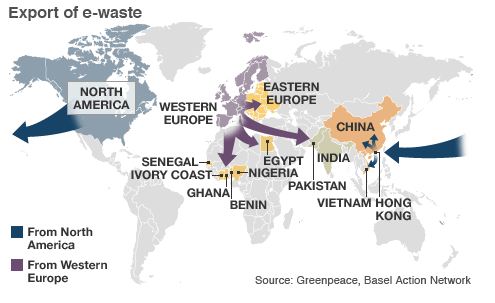
Today more than 50% of the WEEE generated in Europe follows unofficial collection routes, sometimes leading to illegal export and improper treatments. E-waste contains hazardous substances such as heavy metals and chemicals which can damage human health and the environment especially when treated incorrectly. Unfortunately there are plenty of well-documented examples of the environmental and health damage that this exported e-waste causes in Africa and Asia.

But also, if we let 81% of WEEE escape Europe this means that with it we let a big amount of manufacturing industry and jobs escape. This is like having a gold mine and letting others come and take the gold away –albeit paying a high price in health and environmental damage- whilst at the same time complain that the economic crisis is taking the jobs away. Action is needed to reverse these figures.

Action has to go inte direction of setting standards for WEEE recycling but also incentives to redesign them. An important reason why e-waste is not recycled is precisely because electric and electronic items are not well-designed. If designed differently it would be a lot easier and cheaper to manipulate WEEE to extract the raw materials.

This is why the EU is working on an update of the WEEE directive. On the 3rd of February the Environment Committee of the European Parliament voted in favour of an ambitious collection target based on WEEE generated, setting standards on e-waste management and enabling financial incentives for optimized design. The European Parliament requires member states to address financial resources to increase collection and also asks for a better consideration for nanomaterials in treatment processes.

The problem is that in the current economic crisis most EU member states only think on cutting expenditure and sometimes fail to see the hidden benefits of economy booster that can represent investing in capturing more WEEE. The economic booster works in several ways: it creates local jobs in collection and reprocessing, it saves costs in buying new raw materials and saves extraction, processing and transport emissions related to new production.

Sending Zero Electric and Electronic Waste to landfill and incineration just makes sense but turning this waste into resource is an indispensable part of the new industrial revolution. Maximising material productivity is the way forward and Zero Waste is a vital part of it.
READ MORE - The need for Zero Electric and Electronic Waste in Europe