Selasa, 19 April 2011

Zero Waste growing in the UK

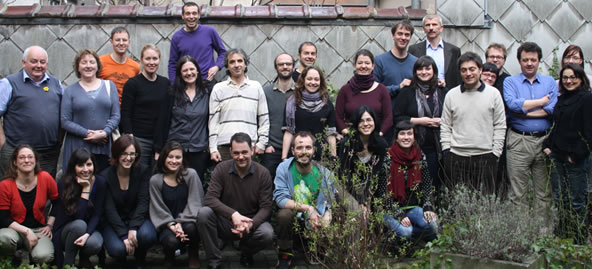
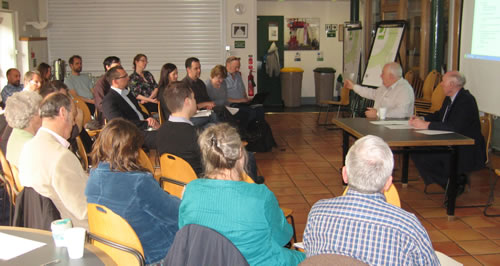
Last Saturday 17th of April 2011 took place in London the annual meeting of the Zero Waste Alliance UK with participants coming from Scotland, Wales and England.

Among the participants there were activists, academics, professional recyclers, social enterpreneurs, politicians and average citizens interested in the topic and it showed the growing interest for the Zero Waste philosophy in the country.

The meeting served to strategise about future plans of the Zero Waste Alliance UK and it also elected a new board and directors.

Among other speakers there was the Zero Waste pioneer, Robin Murray, an industrial economist author of the book “Creating Wealth from Waste” published in 1999 and reference for the Zero Waste philosophy. All in all it was a very stimulating event that laid the ground for a year of expansion of Zero Waste in the country.

Excerpt from Chapter 14 of the book “Creating Wealth from Waste” from Robin Murray:

A programme for zero waste

1. The economic playing field must be rebalanced. The hierarchy of profitability must match the environmental hierarchy. This can be done by revising waste taxes and public benefits in three ways: o introducing a disposal tax that reflects the environmental hierarchy o cutting the subsidies presently given to incineration o introducing a price guarantee scheme for recycled materials to fund the build-up costs of four stream recycling.

2. The £550 million raised in waste taxes must be re-channelled to a Zero Waste Fund. This requires: o a change in the landfill tax regulations so that the 20 per cent offsets are paid into the publicly-run recycling fund o earmarking a further 20 per cent to support employment and environmental goals through recycling o amending the packaging recovery regulations so that payments by the 'obligated parties' are channelled to recycling collectors.

3. Establishing a Zero Waste Agency to administer the transitional funds and 'animate' the change.

4. Founding a new type of Green Academy, equivalent to the German technical schools of the mid-nineteenth century. It would be charged with developing organisational forms, knowledge and skills relevant to zero waste, and new ways of generating 'distributed intelligence'. Its curricula and priorities would be set by the needs thrown up by the new environmental systems. Hence its research, teaching and skill formation would be linked closely to ground level projects - following the approach of the Ulm School of Design - and provide learning resources to those in or outside employment.

5. Appointing Zero Waste Advisers - some recruited from leading recycling and reduction projects overseas - to advise on recycling schemes and projects. The group would be part of an international network, promoting exchanges and part-time attachments, and linking into practitioners' associations.

6. The launch of a 'Closed Loop Industrialisation' Initiative, promoting the development of secondary materials industries, ecodesign and hazard reduction technologies. In addition to material productivity, it would aim to promote 'de-scaling' technologies suitable for local and regional economies. It would be organised in conjunction with regional development agencies.

7. The extension of producer responsibility into new fields, not only electrical and electronics appliances, end-of-life vehicles and tyres, but other durable equipment, newspapers, and hazardous products and materials. The weight of responsibility should be placed at the point of product and process design, since they have the greatest capacity to develop alternatives. In each case, the finance contributed by producers should be re-channelled to develop the alternatives.

8. Devolving responsibility for waste disposal to districts, through direct payments for the costs of disposal (rather than property-based precepts) and giving districts responsibility for identifying and negotiating disposal options within their own boundaries or with neighbouring districts. This would represent the proximity principle with teeth.

9. Restoring public confidence in wade management and democratising risk through: planning reform to give financial support and access to information to civil groups and neighbourhoods affected by waste proposals; a new culture of openness in regulatory bodies; an independent waste hazards control advisory body; and an environmental freedom of information provision.

10. A govemment-led commitment to the zero waste target 'within a generation', reflected in the above measures and the adoption of tighter targets to 'reduce with the aim of eliminating' mixed waste disposal by 2010. This would include a phased ban on organic waste in landfills and on landfilling or incinerating hazard-producing materials, and a moratorium of new mixed waste incinerators for five years.
READ MORE - Zero Waste growing in the UK

Selasa, 05 April 2011

Zero Zabor - new Zero Waste groups in the Basque Country


New Zero Waste groups are appearing in the Basque Country. Following the experience of Usurbil, a municipality that has achieved 88% separate collection after only two years of implementation of the door-to-door collection, and after the municipalities of Hernani and Oiartzun have joined this system of separate collection, 7 new groups of citizen-led Zero Zabor (Zero Waste) groups have appeared in the region of Guipuzkoa in the spanish Basque Country.

Usurbil was pioneer in challenging the separate collection by means of road container (which was achieving rates always below 40%) and decided to implement door-to-door system. Hernani (20.000hab) and Oiartzun followed this example a year later and currently the three of them are all above 75% of separate collection.

However the region of Guipuzkoa still insists in building an incinerator and, in view of the success of the Zero Zabor experiences, has speeded-up the works to stop other municipalities from joining the Zero Waste model. Moreover the Guipuzkoa region refuses to increase the current composting capacity of only 2.500tn and the 4.400tn of high quality organic waste that is separately collected can’t be composted –as the European waste hierarchy would request-.

But the Zero Waste philosophy counts with the support not only of some engaged municipalities but also of citizen groups that are tirelessly working to spread the word that reducing waste and increasing recycling is not only necessary but also possible. By replicating the experienced pioneered by Usurbil and followed by Hernani, Oiartzun and others, Guipuzkoa could create more jobs, less pollution and more local economy and save the 400 million euros that the new unnecessary incinerator will cost. In Guipuzkoa a struggle between the past and the future is taking place, between those who want to burn waste and those who want to reuse and recycle resources. The Zero Waste strategy is showing the alternative to end-of-pipe obsolete technologies and with the new groups in the Basque Country and the already existing Catalan Zero Waste network the change is advancing in Spain.

Websites of the Zero Waste groups in Euskadi -Spanish Basque Country-:
http://www.gipuzkoazz.com/zerozabor
http://zerozabor.ning.com/
http://zarautz0zabor.wordpress.com/
http://zerozaborzumaian.wordpress.com/
http://usurbilzz.wordpress.com/
http://www.blogak.com/gipuzkoasinincineradora/
READ MORE - Zero Zabor - new Zero Waste groups in the Basque Country

Senin, 28 Maret 2011

A Zero Waste family is possible!

Can an average person really create Zero Waste? The challenge was set and during the week 10-17 March 2008, one mother in Bury St Edmunds -UK- gave it a go.

Not being the typical greeny in the beginning she was sceptical about being able to reduce the rubbish to 50% but she managed in only 2 weeks. This motivated her to continue further. After a 8 weeks she only threw out a plaster!

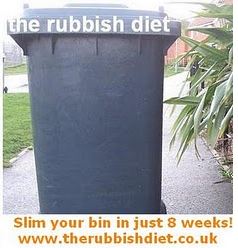
This housewife is Karen Cannard, now an avid blogger in The Rubbish Diet. Karen is a housewife and now freelance writer, based in Bury St Edmunds, where she lives with her husband and two young children.  The blog was only intended to last for just 8 weeks, to chart Karen's attempts at slimming down her bin for Zero Waste Week in March 2008.  However, having realised the importance of the issue it has since been impossible to shut the woman up and went on to inspire many others.  As a result, Karen's work was shortlisted in the 2009 Media Guardian Awards for Innovation, in the Independent Media category and was also a finalist in the CIWM awards for Environmental Excellence in the category of Recycling Champion.

Karen now spends her spare time talking rubbish with anyone who will let her and challenges everyone, everywhere to undergo their own Rubbish Diet challenge.  She's also a regular guest on BBC Radio Suffolk and makes frequent appearances on Heart FM as well as BBC Three Counties Radio and BBC Essex.

Karen is also a motivating speaker and workshop facilitator and in the last 18 months has presented at a range of events including: EERA's Community Action on Climate Change; Norfolk Waste Partnership's annual conference; Inspire East's Community Development gatherings, the Waste Watch waste educators' conference and more recently the Zero Waste Community event in Norwich.

Ironically, Karen was not particularly green when she started this blog and still insists that despite her sustainable tendencies, she is still an almost average member of the mainstream sector of society that is gradually greening up.

As therapy to her newfound busy life, she's even busier penning her memoirs, which she hopes one day to turn into a book: "Almost Mrs Average's Rubbish Diet: the confessions of an accidental eco-blogger". With her tales of domestic disputes,  impersonations of Mrs Overall, interviewing a celebrity in her bedroom and being interviewed live on a landfill site for national TV, she hopes it will engage folk from far and wide, including those who haven't even given a second thought to reducing their waste.

Can you do it too? Why not try your own Rubbish Diet and slim your bin? You'll be amazed at how easy it really is and you could even save some money. If “Almost Mrs Average” can do it, you can too. See here for a plan to reduce your household waste in only 8 weeks.

It is true that most of the times consumers don’t have the choice for sustainable products but this is clearly a growing market and the example of Karen shows that it is possible to live a more sustainable life without much effort. In the following video you can see some ideas of how to turn into a Zero Waste family.

READ MORE - A Zero Waste family is possible!

Senin, 21 Maret 2011

We beat the mountain!

Turning the waste into the raw material for a new product is one of the characteristics of the economy of the future. Less available and more expensive resources will inevitably mean that companies have to close the loop. “We beat the mountain” is one of these social enterprises that see resources where others see trash.

"We Beat The Mountain" is a Dutch organisation with the aim of creating, developing and producing cool functional products made from recycled trash.

The idea to create “We Beat The Mountain” was born as a reaction to the built obsolescence of the products that flood our economy.

In 2009 Han Hendriks, initiator and founder of the project, bought a Samsonite suitcase and after only one use, it broke… For the third time in his life! It was just another one in a row of many broken Samsonites, all of them made of “wrong plastic”. Because of his own reaction of frustration, anger and pure astonishment Han came up with the idea to develop a 100% cradle to cradle suitcase, to become a social entrepreneur and to build a serious company to beat the trash mountain.

“I believe that you need to do something useful with your talents by combining entrepreneurial and social goals. That’s what we’re doing with We Beat The Mountain.”  says Han.

“We Beat The Mountain” launched its first products in the end of 2010: laptop, iPad, smart phone covers (made out of recycled PET) & construction trailer (old sea container + interior designed with recycled materials). For 2011 they are planning to launch a flex baby bag and flex workers trolley also made of recycled materials.

The sales of “We beat the mountain” have been going up in these times of economic crisis and the goals for next years is to recycle 10.000 tonnes in 2011, 25.000 tonnes in 2012 and 50.000 tonnes for 2013.

Beyond the smart design of the products, “We beat the mountain” tries to use one material for every piece of their product so that it is easier to recycle it at the end of its life. Because of this it encourages its customers to return their products so that they can recycle them without losing quality of materials.

For more information see their cool video:


www.webeatthemountain.com and www.facebook.com/webeatthemountain.
READ MORE - We beat the mountain!

Rabu, 16 Maret 2011

Meeting in Brussels of NGOs promoting the Zero Waste strategy for Europe

On Monday 14th of March more than 30 people coming from 13 European countries –Belgium, Bulgaria, Croatia, Estonia, France, Germany, Greece, Italy, UK, Czech Republic, Rumania, Spain and Hungary- got together in the first meeting to define the Zero Waste strategy for Europe. The event was organised by GAIA and EEB.

During the day there were debates about what does Zero Waste actually mean in Europe and the need for the NGO community to set the agenda for waste and resource management for the future. That is proposing to go beyond a recycling society towards a Zero Waste society. It was emphasized that Zero Waste is a journey, not a destination.

The main difference between a recycling society and a zero waste society is the emphasis put on reducing the residual fraction. Zero Waste means maximising recycling but it also means minimising the residual fraction, aiming at phasing out landfilling, incineration and any other disposal option.

Zero Waste is an alternative to traditional waste management because it aims not to manage waste but to phase it out so that the refuse of a process is the raw material for a new process. For this reason Zero Waste can also aim at social and economic regeneration, at bringing the carbon back to the soils, at guaranteing to the consumers the power to choose and at bringing environmental justice to the way we manage our common resources.

In the afternoon there were presentation of Zero Waste experiences from the Italian, UK and Catalan zero waste networks. In Italy there are already 25 municipalities commiting to zero waste and the Zero Waste Research center in Capannori is already in operation with succesful experiences in suggesting redesign operations.

This meeting set up the framework for future cooperation between european NGOs and replication of best practices. The Zero Waste strategy is starting to spread all over the EU!
READ MORE - Meeting in Brussels of NGOs promoting the Zero Waste strategy for Europe

Selasa, 08 Maret 2011

Constitution of the Catalan Zero Waste strategy (Residu Zero) in Barcelona

Following the example of Italy and the UK, last Friday 4th of March took place in Barcelona, Catalonia, Spain, the succesful launch of the Zero Waste catalan strategy!

More than a hundred people representing local organisations, companies, universities and research centers gathered for a whole day to discuss the goals and aims and set up the forum for a Zero Waste strategy in Catalonia. Note that in Spain the waste management is a delegated competence and Catalonia –like any other spanish autonomous region can decide on waste management-.

This initiative was possible thanks to the colaboration of all catalan universities, the association of municipalities for door-to-door collection, municipalities already developing the model of “Residu Mínim” (minimum waste) and the local and international organisations such as GAIA, CAPS, Ecologistes de Catalunya, Cepa and other members of the steering committee.

In the conference we had the chance to learn about the best zero waste practices in the world (such as San Francisco in the US or Kovalam in India) as well as european best practices such as the first European Zero Waste town; Capannori. Rossano Ercolini from the Rete Italiana di Rifiuti Zero and head of the Zero Waste Research Center in Capannori was present to explain the success of the italian experience.

The “Estratègia Catalana pel Residu Zero” (the Catalan Zero Waste Strategy) will organise sinergies between academics, practitioners, policy-makers and civil society to channel the change of paradigm from a recycling society towards a zero waste society. In this sense, the catalan ZW strategy wants to advance in the direction of a more efficient management of resources, more environmental justice and de-carbonisation of the economy.

The Catalan Zero Waste strategy is born in a context of insustainability in the management of municipal, construction and demolition and industrial waste.

Catalonia, despite very good scattered practices of high separate collection in some towns, still sends 70% of its waste to disposal which represents a clear inneficient use of materials, a lot of avoidable GHG emissions and a threat for the health of the citizens.

The solution is not to build new incinerators or burn municipal waste in cement kilns but rather to work on the replication of the best practices of separate collection (in some cases above 80%) in order to increase prevention and recycling.
A change of paradigm is necessary and this is exactly what the citizen driven Catalan Zero Waste strategy pursues.

In the meeting it was discussed that Zero Waste meant:
- Advancing towards a circular economy in which waste can become the raw material of the future,
- Avoid the generation of any waste that can be avoided
- Ban the disposal of any waste that can be reused, recycled or composted
- The redesign and substitution of those wastes which can’t be reused, recycled or composted.

The Catalan Zero Waste strategy proposes to:

1. Invert the tendency and instead of disposing of 70% and recycling 30% reverse the trend and move towards recycling 70% and disposing of 30% for 2020. Zero Waste -less than 10kg of residual waste per capita- for 2030.

2. Set up a network of organisations, institutions, companies and universities to plan and implement this change of paradigm.

3. Promote the best local and international practices of source separation, separate collection, waste prevention, etc so that they can be replicated elsewhere in Catalonia.

4. Promote innovation in the production and legislative process in view of creating the right climate for a zero waste strategy.

5. Create a Zero Waste Research Center in which the residuals can be examined to detect failures in the design which justify a substitution for a newly designed recyclable product.

The most important thing of the event, besides the high attendance and motivation from all sectors of society, was the commitment of the participants and the concreteness on the next steps to take to make it possible to advance towards a Zero Waste future.
READ MORE - Constitution of the Catalan Zero Waste strategy (Residu Zero) in Barcelona