Senin, 28 Februari 2011

Effecorta - Sustainable, Zero Waste shopping is possible!

Do you think that eating sustainable food has become a fulltime expensive job? This might be true in many places in Europe but there are more and more shops that show the way towards sustainability. Effecorta, in the ZeroWaste-pioneer town of Capannori in Italy, is a very good example of how sustainable, zero waste shopping is not only necessary but is also possible!

In the shop Effecorta 80% of the products come from 70km around the Capannori municipality (aiming to get to 95%) and many of them are organic.

But this is just the top of the iceberg; the shop adheres to the principle of Zero Waste and it doesn’t use any plastic bag or any non-reusable package. This is not only true for the tomatoes but also for soap, milk products, cosmetic creams, beer, wines, beans, rice, spices, salt, sugar… you name it! Everything they sell is in refillable, re-usable or/and biodegradable packaging.

This system:

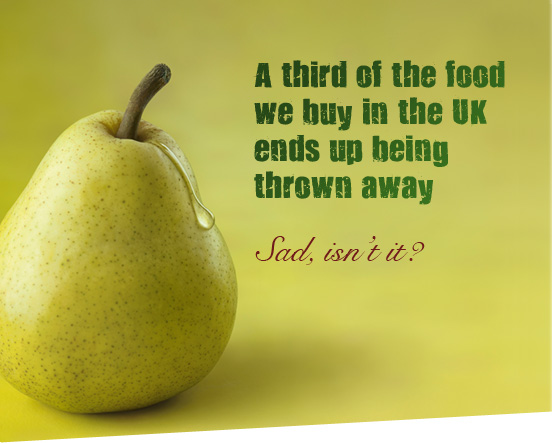
- allows every buyer to buy according to its needs which minimises the waste eventually produced by normal packaged stuff and responsible for lots of food to be wasted (8.3 million tonnes of food is thrown away by households in the UK every year),

- saves us from having to check the source and composition of the products because you know they are all local and in most of the cases organic (time saving),

- reduces the carbon food-print of the products because they don't have to be transported long distances (less CO2 emissions),

- contributes to minimise the waste generation at home (no waste packaging and a lot less food wasted= less cost for the citizen and the municipality),

- because you buy the amount you need and not what is in predefined packaging in the end you end up spending (and buying) less than in a normal supermarket, even if you buy bio! An italian study shows how buying bulk can reduce the food bill in 64€ per month/family that is 775eur per year,

- well, leaving aside everything above: food tastes better and is more nutritive which at the end is what we all want!

This initiative was started by 6 idealists from Tuscany in August 2009 and it has already achieved economic stability and from all the products, the sales of the organic products are increasing by a 20%.

A lot of people questioned in the beginning the quality of natural biological refillable soaps and others. For this reason in the beginning the entrepreneurs gave to normal people (not the already convinced greeny) different soaps to try and in the end the customers decided to stay with the locally produced biological soap with the refillable packaging for pure practical and quality reasons.

It is important to mention that the customers of this shop are all kinds of normal people from Capannori and surroundings, a good example of how Zero Waste fits and improves everyday life. This has been recognised with the award of Tuscany Eco-efficiency.

Effecorta proves how zero waste and sustainability can get into people's lifes whilst feeding them better, creating local jobs, reducing carbon food-print of products and phasing-out waste!
READ MORE - Effecorta - Sustainable, Zero Waste shopping is possible!

Kamis, 17 Februari 2011

Nissan Leaf & Zero Waste

The new Nissan Leaf is an electric car that once it is produced it doesn’t generate new CO2 emissions –other than those associated to generating the electricity-.

The Nissan Green Program focuses on reducing waste at every stage of a car’s life, from development to disposal. Hence, the car is partly made from materials recycled from old interior parts, bumpers and plastic bottles. Nissan is using materials taken from vehicles that have reached the end of their life and reducing the use of non-renewable resources and substances that will end up as waste.

Insulation layers in the floor and skin fabric of headlining are made with fibres from recycled plastic, the fabric for the seats and armrests used in the Leaf is made from recycled plastic bottles, bumpers are made from used or damaged recycled bumpers, etc... At the end of life of the Nissan Leaf a new life starts with recycling: 99% of the car and 100% of the lithium car can be recovered. Since the battery maintains 80% of its capacity after 5 years of use it can be given a second life, otherwise it can be dismantled and its materials recovered.

Nissan Leaf is a good example of how to design waste out of the system: the environmentally damaging substances are reduced, a new chemical-free system to remove paint from the bumpers is used, the lithium-ion battery can get a second life as energy storage solutions thanks to a “Reuse, resell, refabricate and recycle” venture from the Sumitomo group, the aluminium wheels from end-of-life vehicles are recycled to create high grade suspension parts, etc...

In those situations where walking, cycling or public transport are not an option Nissan Leaf offers a Zero Waste solution to get from A to B.

READ MORE - Nissan Leaf & Zero Waste

Jumat, 11 Februari 2011

The need for Zero Electric and Electronic Waste in Europe

Can you believe that from all electric and electronic waste generated in Europe only 19% is recycled? Yes, in times where materials are more and more scarce and the prices continue to rise and when the EU is almost completely dependent on foreign supply for metals and rare earths we still afford to let 81% of these resources escape from being reintroduced in the production process in Europe.

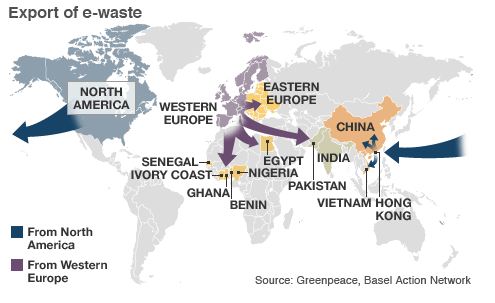
Today more than 50% of the WEEE generated in Europe follows unofficial collection routes, sometimes leading to illegal export and improper treatments. E-waste contains hazardous substances such as heavy metals and chemicals which can damage human health and the environment especially when treated incorrectly. Unfortunately there are plenty of well-documented examples of the environmental and health damage that this exported e-waste causes in Africa and Asia.

But also, if we let 81% of WEEE escape Europe this means that with it we let a big amount of manufacturing industry and jobs escape. This is like having a gold mine and letting others come and take the gold away –albeit paying a high price in health and environmental damage- whilst at the same time complain that the economic crisis is taking the jobs away. Action is needed to reverse these figures.

Action has to go inte direction of setting standards for WEEE recycling but also incentives to redesign them. An important reason why e-waste is not recycled is precisely because electric and electronic items are not well-designed. If designed differently it would be a lot easier and cheaper to manipulate WEEE to extract the raw materials.

This is why the EU is working on an update of the WEEE directive. On the 3rd of February the Environment Committee of the European Parliament voted in favour of an ambitious collection target based on WEEE generated, setting standards on e-waste management and enabling financial incentives for optimized design. The European Parliament requires member states to address financial resources to increase collection and also asks for a better consideration for nanomaterials in treatment processes.

The problem is that in the current economic crisis most EU member states only think on cutting expenditure and sometimes fail to see the hidden benefits of economy booster that can represent investing in capturing more WEEE. The economic booster works in several ways: it creates local jobs in collection and reprocessing, it saves costs in buying new raw materials and saves extraction, processing and transport emissions related to new production.

Sending Zero Electric and Electronic Waste to landfill and incineration just makes sense but turning this waste into resource is an indispensable part of the new industrial revolution. Maximising material productivity is the way forward and Zero Waste is a vital part of it.
READ MORE - The need for Zero Electric and Electronic Waste in Europe

Kamis, 13 Januari 2011

Zero Waste initiative in Coventry, England

Here we have an example of an inclusive Zero Waste initiative which brings together the actors of society to organise the phasing out of waste from our societay. In October 1999, at a public meeting to discuss greener low carbon alternatives to a proposal of a giant waste incinerator, Coventry's Director of City Development, John Mc Guigan, proposed the challenge of finding a long-term solution for waste which would be both economically and environmentally viable.

Over 2010 the 2020 "Zero Waste Initiative" has begun to take shape. It has drawn people together from the main areas involved or interested in developping "waste" as a resource. Over a hundred people have attended meetings and have come from public bodies such as WRAP and DEFRA, local business and commerce, environment and recycling groups, garden organic, councillors and officers, community groups, professional bodies and academics from the two local universities. There were several meetings over the year and in one of them the "Building Research and Innovation Networks" (BRAIN) Department at Coventry University produced the following 5min video in which Professor Paul Connett describes the basis of a proper Zero Waste strategy.

READ MORE - Zero Waste initiative in Coventry, England

Selasa, 28 Desember 2010

LAST MINUTE MARKET – a great tool of waste prevention

In the last post we dealt with the worrying amounts of food waste in Europe. In this post we want to present an european fantastic and succesful initiative to reduce the food waste; the Last Minute Market.

Last Minute Market (LMM) links shops and producers (processing industries, food shops, retail stores and the like) who have unsold food which would otherwise be discarded with people and charities who need food.
Prof. Andrea Segrè started with this project in 1998. The University of Bologna developped SMM as a spin-off and it is now active in more than 40 Italian towns and has new projects starting in other places in the world.

LMM operates in the areas of unsold but edible food, unharvested vegetables, non-conform seeds, un-used catering products, unsold books and now also unused pharmaceuticals.

LMM eliminates waste by helping companies manage surplus (food and other items) and taking them out of the disposal route. Public institutions and communities also benefit from the reduction in the flow of waste to landfill and incineration which saves them money in taxes, health and environmental damage and less dependency on further foreign food imports. Finally it also improves food availability for the sectors of society that need it, and third sector (charity) destinataries who reduce operating costs and release resources for other projects.

LMM brings about environmental, economic and social benefits. According to founder Prof. Segrè if LMM Food were to be adopted nationwide in Italy by supermarkets, small shops and cash and carry shops, €928,157,600 would be recuperated in products. Furthermore, these products could provide 3 meals a day to 636,000 people – in total 580,402,025 meals a year. Also by not sending these products to the landfill, 291,393 tonnes of CO2 emissions could be spared.

In April 2010 LMM launched “ancora utili”, a program to recuperate unexpired prescription drugs donated by single users, doctors or hospitals. The pilot project in Ferrara has involved 11 pharmacies is projected to collect drugs for a market value of 15,000 euros per year.

In October 2010 LMM was presented in the European Parliament and the Agriculture Committee approved this resolution to reduce 50% of the amount of food waste throughout the food chain.

LMM is a win-win project and another piece of a Zero Waste strategy. The prevention of waste helps optimise resource use with benefits for the different stakeholders as well as for the environment.

For further information (in italian) see www.lastminutemarket.org
READ MORE - LAST MINUTE MARKET – a great tool of waste prevention

Kamis, 23 Desember 2010

Towards Zero Food Waste in the EU

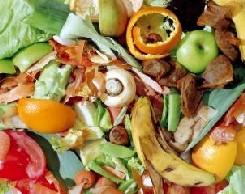
In Europe an estimated amount of 50% of the food produced is wasted. This changes from country to country and from sector to sector but in the best case not less than 20% of our food ends up as waste. At the same time more than 50 million of Europeans are at the risk of poverty. This is simply unacceptable from a social, economic and environmental point of view.

Unhealthy, uneconomic and unsustainable


In Sweden, an average household is estimated to throw away 25% of food purchased. An average Danish family with 2 adults and 2 children wastes food for 1.341 € a year (2.15 billion € for the whole country). In Italy, about 20.290.767 tonnes of food waste are formed every year along the whole supply chain. Each French citizen throws away every year 7 kilos of food still in the original package when in the same country, 8 million people are at risk of poverty.

Simultaneously, studies show that western countries are consuming every day a surplus of 1400 calories per person for a total of 150 trillion calories a year. So, apart from the waste in the food supply chain, overeating is gradually becoming a serious public health issue in a growing number of countries.

From the environmental perspective food waste accounts for more than one quarter of the total consumptive use of finite and vulnerable freshwater and more than 300 million barrels of oil per year. Moreover each tonne of food waste generates 4.2 tonnes of CO2.

How is food waste generated?


Among the many several reasons we find that packages are too large for small households, that the portions prepared for each meal tend to be too big, failed preparation of the recipe, incorrect transport, fear of deterioration caused by the proximity to the expire date, not wanting to eat leftovers from the previous day, bad refrigerator... Nothing that can’t be fixed.

Taking action for Zero Food Waste


Like with any other process human beings have to learn to manage this resource named food. In the past a lot less food was wasted; the wastage started 50 years ago with the over-abundance of products and very low cost of disposal; this caused that Europeans paid less attention to the food waste they generated.

Times have changed; overabundance times are over and the costs of this irresponsible and inefficient behaviour are increasing. The world population has grown tenfold and hunger is still persistent and growing –also in Europe-, the EU has constant and unsustainable yearly deficit of 75 million tons of biomass with the rest of the world, the costs of disposal for waste continue to increase and EU legislation pushes in prevention.
Much of the food wastage can be reduced with the right prevention policies and campaigns to make sure that what would otherwise be waste can be still eaten or reintroduced in the system. Measures as simple as changing the size of the portions, supplying food in smaller packages (beware of the packaging waste), training young people in how to preserve food, etc… are part of the tool-box we need to address the problem.

In this direction, it is to be welcomed that on the 28th October 2010 the agriculture committee of the European Parliament approved a joint declaration against food waste in which they were asking for a reduction of 50% of the amount of food waste throughout the food chain.

Unfortunately the Environment Directorate of the European Commission still hasn't considered appropiate to include neither waste prevention targets nor recycling targets for biowaste in EU legislation which is stopping the EU from making major shift forward in the reduction of food waste. In the future it will be necessary to work at European, national and local level in order to reduce this big sign of unsustainability and inefficiency that is food waste.

Below we can find some encouraging initiatives and campaigns in some EU member states:

United Kingdom Loves Food and Hates Waste


In Britain every year 18 million tonnes of food still perfectly edible are thrown away (WRAP) by households alone for an annual retail value cost of 14 billion pounds: at the same time 4 million people in the UK do not have access to a healthy diet. The environmental implications of stopping to produce food waste would have a CO2 equivalent of taking 1 in 4 cars off the road.

For this reason WRAP launched the campaign “Love Food - Hate Waste” in 2007 which by January 2009 was already a success in making 2 million UK households take steps to reduce food waste: this has stopped 137,000 tons of food from being thrown away which prevented 600,000 tonnes being emitted and resulted in a saving of nearly 300 million £ .

Visit their website for great tips about how to reduce your food waste: http://www.LoveFoodHateWaste.com

Holland tastes the food waste


The Netherlands is throwing away 2.4 billion € per year on food waste, that is more than 400€ per household representing more than 20% of the total food in the market.

For this reason the Dutch government has committed to reduce by at least 20% the food waste by 2015. To achieve this goal and following the example of the successful initiative in the UK the campaign “taste the waste” has been launched in which they teach how to save money without too much extra effort.
The Dutch campaign has also sparked the creation of a global campaign to fight food waste, that is www.tastethewaste.com

Sources:
French Environment and Energy Management Agency

Danish Agriculture & Food Council -2010
Lundqvist, J. 2010 ’Producing more or Wasting Less. Bracing the food security challenge of unpredictable rainfall’.
The Progressive Increase of Food Waste in America and Its Environmental Impact by Kevin D. Hall, Juen Guo, Michael Dore, Carson C. Chow
READ MORE - Towards Zero Food Waste in the EU

Jumat, 10 Desember 2010

Zero Waste to reduce EU dependency on materials

The clever thing about minimising waste and recycling stuff is that we recover the materials and we can use them again instead of having to import them from far at increasing prices.


The resources in the world are not only limited; they are also becoming more and more scarce and hence more difficult, polluting and expensive to extract. In absolute terms, Europe is using more and more resources. For example, resource use increased by 34 % between 2000 and 2007 in the EU-12. This continues to have considerable environmental and economic consequences. Of 8.2 billion tonnes of materials used in the E-27 in 2007, minerals and including metals accounted for more than half, and fossil fuels and biomass for about a quarter each.
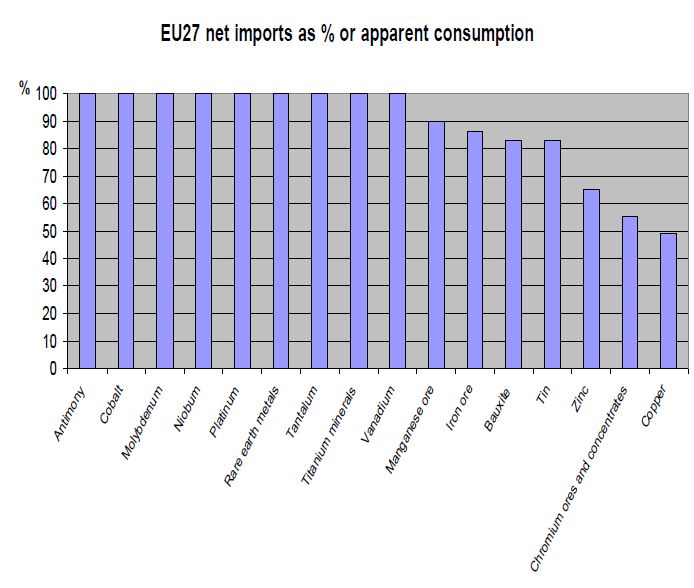
In the following graph we can see how heavily dependent is the EU from imports of metals (source EEA).


For the majority of metals the EU depends 100% on its imports. At the same time what we see is that in the EU 50% of the recyclable municipal waste is landfilled or incinerated and the exports –legal and ilegal- of metals and electronics to be recycled –mostly downcycled- have increased. From the strategic point of view –let alone environmental and economical considerations- this is nothing less than stupid.


The recycling sector in Europe has an estimated turnover of EUR 24 billion and employs about half a million persons. Thus, the EU has 50 % of the recycling industries in the world. Yet, the EU lets most of its electronic waste to be shipped abroad for low quality recycling when nobody in the earth needs more the resources than the EU.


The EU has been producing legislation to try to shift this exodus of materials into european recycling plants. So far the directive on waste from electric and electronic equipment has required that every member state collects 4kg per capita per year but right now there are countries like Belgium or Germany that are well above this target whilst others are far below. The revision of the WEEE aims to collect 65% of generated WEEE by 2016 which is a very necessary improvement to create jobs and a solid recycling industry in Europe that reduces necessity to extract, process, and transport the materials that we need.


Some companies are proving that, if they are given the chance, they can recover most of the materials and generate jobs and economic activity whilst avoiding the extra emissions of exporting waste for disposal and having to extract and manufacture new materials. Umicore, for instance, is one of the leading companies in Europe in recycling of WEEE and shows the changing trends; from being a belgian mining company with poor environmental record they understood that the future was to focus not on extracting materials from the earth but rather to extract them from the already produced equipments that had become waste. Thanks to this Umicore has not only managed to be a world leading recycler but it has also managed to pay its environmental liabilities.


Umicore treats 300.000 tones of electric and electronic waste from which only 15.000 tones become waste; that is 95% of the waste is recycled. Whilst there are some rare earths present in small devices such as mobile phones and which so far can’t be recovered the truth is that most metals are recovered at a higher rate than what can be achieved in backyard recycling –what would happen if exported outside Europe-. For instance, in Umicore 95 to 99% of gold is recovered whilst in backyard recycling only 20 to 25% can be recovered –with a lot higher enviornmental and health impact-.


It is therefore possible to close the loop in some sectors of our economy but in order to do so it is necessary that the authorities collaborate with the right legislation and market drivers. Highly efficient recycling systems keep jobs in Europe, reduce dependency from imports, lower emissions, reduce environmental impact in third countries and help move in the direction of sustainability if they are combined with the right prevention tools.


Zero Waste is about reducing the use of materials, reusing them as much as possible and recycling them as last option. Europe can’t afford to continue trashing resources; eliminating waste with incineration and landfill don’t make sense but this is even more true in the case of electric and electronic waste.


The clever thing about minimising waste and recycling stuff is that we recover the materials and we can use them again instead of having to import them from far at increasing prices.
The resources in the world are not only limited; they are also becoming more and more scarce and hence more difficult, polluting and expensive to extract. In absolute terms, Europe is using more and more resources. For example, resource use increased by 34 % between 2000 and 2007 in the EU-12. This continues to have considerable environmental and economic consequences. Of 8.2 billion tonnes of materials used in the E-27 in 2007, minerals and including metals accounted for more than half, and fossil fuels and biomass for about a quarter each.
In the following graph we can see how heavily dependent is the EU from imports of metals (source EEA).
READ MORE - Zero Waste to reduce EU dependency on materials