Selasa, 22 November 2011

Little Museum of Bad Industrial Design

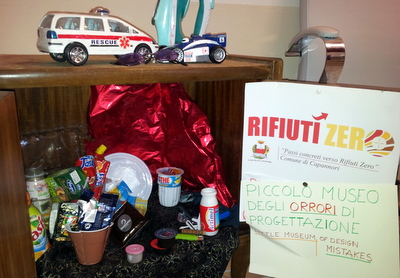
Primary school students of Capannori, Italy, set up the Museum of Bad Industrial Design (Piccolo Museo degli orroridi progettazione). A museum of packaging and products that cannot be reused, repaired, recycled or composted and hence have to end up in the dump.


This experience allowed the students to observe their everyday life and pick those things that were not sustainable. The experience was enlightening for the students but also for the grown-ups; how can we allow products to enter the market when even children can see that they are designed for the dump?


In order to enlighten the industrial designers of the big wealthy companies producing these goods the pupils wrote letters to them asking to please think about the future and produce products that could be recycled or composted at the end of their lives. As with the case of the coffee-capsules some of them replied with thank you notes and confirming their commitment to improve the design in the future.


Here is a good experience to involve children in waste prevention. The less non-reusable/repairable/recyclable stuff in the market the closer we are to Zero Waste!
READ MORE - Little Museum of Bad Industrial Design

Selasa, 15 November 2011

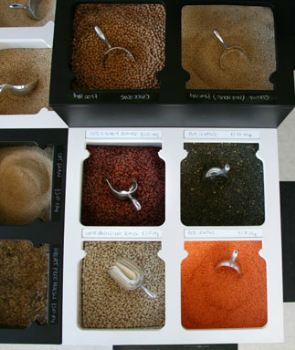
Unpackaged: shopping without packaging

Look at your home waste and you will see that it is mostly packaging. Once you have removed the food waste and paper what is left is mostly single use plastic bottles, cans, trays... Therefore, if you minimise the packaging in your shopping you will be generating less waste. Easy, uh?

Unpackaged is one of these shops in Europe that allow you to shop without having to bring home a bunch of single-use recipients and plastic bags that only harm the planet and fatten our bins. Unpackaged was founded in 2006 by Catherine Conway in the belief that there is a better way to sell products, so that customers can do the right thing – for themselves and for the environment.

Catherine set up Unpackaged because she wanted to refill her groceries using her own containers. The dream was to set up a beautiful shop that made it really easy for customers to come & refill all their daily essentials.

The website of Unpackaged explains very well why whilst some packaging is necessary in our modern industrialised food chain, unnecessary packaging is a waste because of:

Cost: It increases the price of the goods you buy. You are charged twice – first when you buy over packaged products and then through council tax for disposing of your rubbish.

Waste: It wastes resources at every level: production, storage, transport and disposal.

Pollution: Landfill and incineration are the two main ways of dealing with packaging waste. These are major pollutants for people and the environment as they release toxics and greenhouse gases.

What about recycling? While some packaging is recycled, most ends up in landfill sites and incinerators and some packaging is difficult and impossible to recycle. Recycling is certainly part of the solution, but it will only work if we use less packaging and adopt more ‘reusable’ ways of doing things – Unpackaged is based on this ethos.

This is why the mantra of unpackaged is:

Reduce by only buying what you need
Reuse by bringing your containers for a refill
Recycle what you can’t reuse

And… if you can’t reuse or recycle it then don’t buy it!

There is a growing trend in Europe but also around the world to minimise packaging. After all, when people go shopping they want to buy food, drinks, etc, they don’t want to buy packaging!
In a sensible world the producers should be interested in getting back the packaging so that they don’t lose the materials and this way they can use them again and again. This is not only how our sensible grandparents used to do it, it is also the basis of a how a deposit refilling system works or how Extended Producer Responsibility is being to be implemented in British Columbia in Canada.

Implementing Zero Waste strategies it is not only sensible and fun, it also attracts interest from the media. See these press highlights for Unpackaged:

  • Two lovely videos from CNN & Reuters which show off Unpackaged.

  • Features in many different types of publications from national newspapers to industry, design & consumer magazines – The Grocer, Which Magazine, The Independent, Style Will Save Us

  • Time Out recently voted Unpackaged the #48th best shop in London

  • Catherine was voted #32 in the Observer Food Monthly Top 40 Eco Heroes.

  • Unpackaged was included in Time Out’s ‘Little Black Book’ of the 500 most essential services in London

READ MORE - Unpackaged: shopping without packaging

Kamis, 10 November 2011

Succesful Zero Waste event in Rome

Organised by Zero Waste Lazio with the support of the Italian Zero Waste Network

Last weekend the Piazza Apostoli in Rome was filled with more than 3000 people who were asking for a Zero Waste alternative to the “Polverini local plan" which instead of reducing, reusing, composting and recycle wants to dispose of most of it.

The alternative plan proposed by the citizens puts separate collection at the center of the policy; recycling and composting what cannot be prevented or reduced and instead of resorting to mega landfills and incinerators for the remaining waste (10 to 12% of the total) it proposes that this waste should be studied and submitted to cold-treatment prior being biologically stabilized and stored in a landfill.

The Zero Waste demonstration asked not to replace the now closing dump of Malagrotta with a new mega landfill elsewhere in the Lazio province. Instead it is requested that the municipality of Rome, which represents 5/6 of the total municipal waste generated in the Lazio region, should implement door-to-door separate collection integrated with a system of reuse, repair and recycling centers.

The Italian Zero Waste Network is asking for the immediate replacement of the people responsible for this mismanagement and the return of a democratic logic that should bring back the power to the local communities and institutions.

The Italian Zero Waste network will be back to Rome on December 3rd to move forward with the local Zero Waste organisation to continue pushing for these goals. In this occasion there will be participation from people from international Zero Waste speaker, Paul Connett.

On behalf of the Italian Zero Waste network
Rossano Ercolini

READ MORE - Succesful Zero Waste event in Rome

Selasa, 25 Oktober 2011

Retorna - When waste has a value it stops being waste

When something has a negative value there is no incentive to deal with it. It is then left in the environment and we all suffer the consequences. Partly, a Zero Waste strategy consists in creating markets so that the products find a use at the end of their life.

Littering happens when food or beverage containers have a zero or negative value at the end of its use. Hence, the best way to avoid littering is to give waste a value. An empty can or bottle can end up in the bin, in the streets or recycled depending on whether the item has a value or not. Experience in Germany, Sweden, Norway, Denmark or the Netherlands shows that when the empty packaging is given some value (a deposit of 5 to 25 eurocents) the packaging will be recycled in more than 90% of the cases. Experience in countries without a deposit system shows that recycling happens in less than 50% of the cases. In those cases the waste ends up as liter or in a landfill or incinerator.

Retorna.org is the campaign in Spain to reintroduce a deposit system for beverages. This campaign takes place under the umbrella of the Zero Waste strategy in the country and wants to replace the current system in which the recycling of beverage packaging falls under 40% -due to the lack of incentives for people to do the right thing- to a deposit system that would allow to duplicate the recycling rates -which would reduce emissions-, increase the purity -and hence recyclability- of the materials, create more green jobs, radically reduce littering, reduce costs for municipalities and consumers and enforce the polluter pays principle. This alternative system -which was in use in Spain until the 1980s- and which obtains better results in any European country that has implemented it, it is being fiercely opposed by the industry. It is interesting to observe how the arguments used by the industry today in Spain are the same sort of arguments that were raised also by the industry in countries such as Germany before implementation. These fears proved to be exagrated and the system has been very satisfactory allowing the industry to get back the materials.

To raise awareness about this topic the campaign is doing a tour around the country with a van that gives the opportunity to citizens to try the system. For every beverage container they bring they get 5 eurocents. This might look like a small amount of money but to the surprise of the organisers when the van set up the stand in the Rambla del Raval in Barcelona hundreds of people started queueing; during the two days the van stayed there the streets  in downtown Barcelona were cleaner than ever and almost 50.000 containers were recovered with only one machine. The success was such that the van had to be moved away from the location because people started queuing during the night with containers they had collected elsewhere. The deposit system proved to be not only a good way to reduce litter and recycle more, but also a way for some people to generate get an income that in these times of economic hardship is becoming more and more difficult to do.


In a Zero Waste economy we should deal with any waste that has a negative value and redesign it so that we create positive incentive or change the way we perceive it so that its value starts being positive. For instance, the company Terra Cyle started paying to garbage pickers in Rio de Janeiro, Brasil, to collect chip bags -a priory non-recyclable-, suddenly chip bags disappeared from the landscape and chip bags automatically stopped being waste.

Zero Waste is about making waste visible so that we can identify the problem in the design or in the system. Giving waste a positive value so that it can generate markets is a way to reduce the amount of waste going to landfill or incineration.
READ MORE - Retorna - When waste has a value it stops being waste

Jumat, 14 Oktober 2011

Before recycling: Repair!

The excellent ‘Self-Repair Manifesto’, developed by iFixit, a free repair manual that is open to anyone to access and edit. Pass it on!


READ MORE - Before recycling: Repair!

Senin, 10 Oktober 2011

"Beautiful politics is when the politicians work with the activists" - Zero Waste international meeting in Capannori

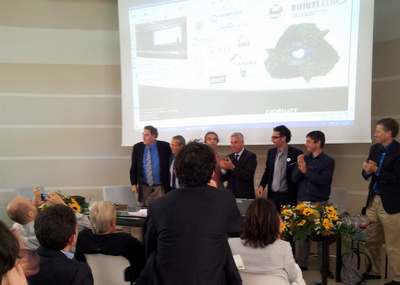
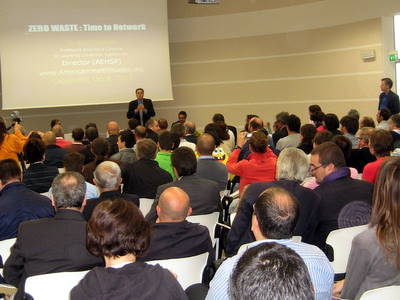
More than 200 participants including mayors, councillors, enterpreneurs, artists, waste experts and civil society participated last weekend 8-9th October in the first international Zero Waste meeting for municipalities.


The path that started 4 years ago by Capannori, when mirroring itself with San Francisco decided to declare the Zero Waste goal for 2020, is now followed by 56 municipalities (the objective for the Zero Waste Italy network of municipalities is to reach 100 ZW municipalities for 2012) . What started as a grass-root movement that no political party wanted to support is gaining political momentum across the political spectrum. The last incorporation to the ZW network was the city of Naples, the vice-mayor of which attended the gathering and declared the commitment of the recently elected city-council to turn around the bad image of Naples. Indeed, the change has come to Naples where for the moment 165.000hab are being the first ones to experience the door-to-door separate collection system with encouraging results of 66% separate collection. The plan is to slowly expand the new system around Naples and show the world that if ZW is possible in Naples it should be possible anywhere.


The meeting included impressive presentations from the city of San Francisco but also succesful experiences from Sweden, Wales, Catalonia and the Basque Country, Spain. The town of Hernani in the Basque Country after only 2 years of implementation of the door-to-door collection system saw the recycling levels more than double and now stands at 80% showing the Zero Waste path in the Gipuzkoa region.


During the meeting the documentary “Zero Waste” from Victor IbaƱez was screened for the first time and the plan is to screen broadly around Italy. Below you can see the trailer.


During the second day the meeting of the Zero Waste Research Centre focused on the topic of bad-design; following the composition analysis of the fraction that could not be recycled and has to be sent for disposal. The participants discussed with the experts possible alternatives to take out of the residual waste (the waste that cannot be recycled) nappies, shoes, coffee-capsules and some plastics.


Thanks to the Zero Waste strategy Capannori has been the cradle to successful experiences that are now being replicated elsewhere; packaging-free shops such as Effecorta (which is now opening in other places in Italy), reusable nappies companies such as Ecobimbi, reuse and repair centres such as the ASCIT center inaugurated this last weekend by the mayor of Capannori and the vice-mayor of Naples. The last initiative is the re-shuffling of the shoe-making industry, one of its most traditional ones, with the design of long-lasting, toxic-free shoes with biodegradable soles. The parts of these shoes can easily be separated in order to increase the recycling potential. The goal is to keep and increase local jobs with good salaries.

All in all, a very inspiring meeting that continued to increase the commitment, the motivation and reach-out of the Zero Waste thinking in Europe!
READ MORE - "Beautiful politics is when the politicians work with the activists" - Zero Waste international meeting in Capannori

Rabu, 05 Oktober 2011

"Waste is a mistake, not a Resource" - ZW conference in Coventry, England

On September 9th, representatives from UK central government, local authorities and universities gathered together in Coventry along with social enterprises, multinationals, waste management companies, the third sector and environmental bodies, to explore how UK society can create a proper zero waste economy in line with aspirations for 2020.

For many, zero waste translates as 'zero waste to landfill', but a strong message that was made clear at today's conference was that a zero waste goal should be exactly what it says...simply ZERO waste, achieved through innovations that design out waste during manufacture and a society that promotes reuse and technologies that enable precious resources to be properly recycled rather than the assumption that the simplest destination for residual waste is to be burned with no other opportunity for recovery.

Anyone who has any doubts over whether this zero waste vision could become a reality, should consult with American waste campaigner Professor Paul Connett, pictured above, who presents a strong case for product redesign, economic incentives, community empowerment and the development of separation & research facilities at landfill\incineration sites, as being vital components in making it work.

And the key to success is everyone in the chain working together to drive the results forward. Coventry University, which already runs 50 courses in sustainability and the environment, revealed plans to create a Zero Waste research centre, working closely with the local authority.

Today's programme also presented examples of industry's approach to creating zero waste through manufacturing processes and facilities management as well as examplers of community-based programmes and waste stream development.

The presentation by Garden Organic's Myles Bremner particularly struck a chord, as it was one of the strongest case studies for how individuals can make a difference, not only regarding reducing their own waste, but by empowering their communities. Through the Master Composter scheme, Garden Organics has been successful in creating a peer-to-peer network, where members of the public are able to help others, by sharing their expertise locally.

Although this event was organised independently of National Zero Waste Week, it was a welcome coincidence and well-timed for this week's calendar. It would have been news to most of those who attended today's conference that this week is indeed the 4th national awareness week of its kind.

The Rt Hon Caroline Spelman MP, Secretary of State for Environment, Food and Rural Affairs attended the event and stayed for a short while following her keynote speech. Although the government is placing waste prevention high on its agenda and has created a path towards a zero waste economy, the conference demonstrated that it needs to work harder and be tougher on manufacturing to design out waste and solutions for maximising the waste that remains.


Mal Williams, CEO of the Welsh community recycling network Clych, who also spoke at today's conference, really couldn't have put the point more bluntly.

"Waste is a mistake, not a resource," he asserted and referring to how society goes forward, he added that it is time to move from a "Careless system to a CAREFUL system".

And I have to agree, this should be the barometer against which a sustainable zero waste strategy should be measured and judged.

---
(This post is an adaptation from The Rubbbish Diet)
READ MORE - "Waste is a mistake, not a Resource" - ZW conference in Coventry, England